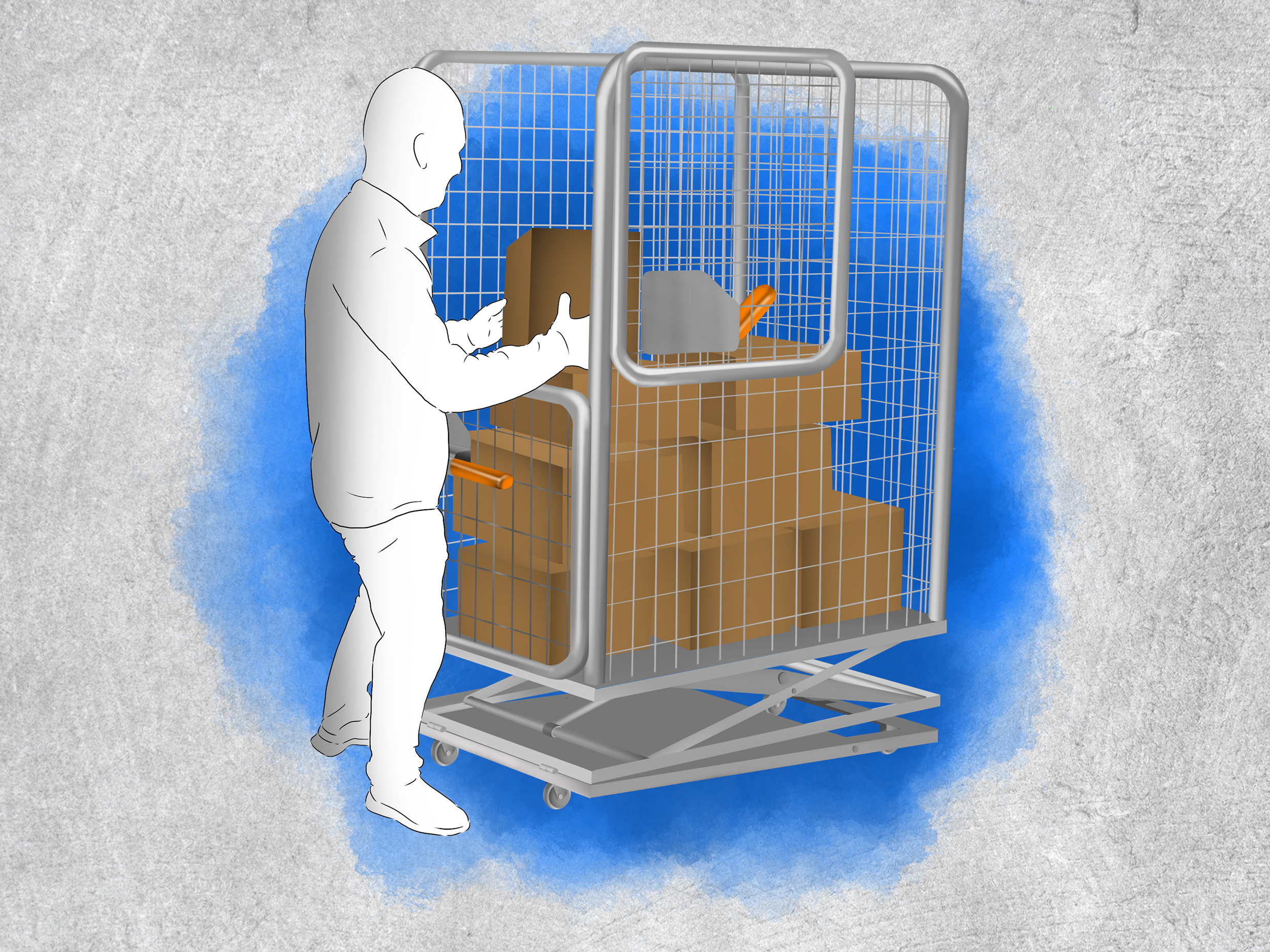
The project involved developing a lifting trolley to enhance the ergonomic working conditions for staff at post offices. By focusing on addressing problematic work positions and reducing exposure to them, the goal was to minimize ergonomic strain during package scanning and delivery—the primary tasks performed by the personnel. The project targeted post office staff, including those at the associated grocery store due to work rotations. Through interviews, documentation, risk assessments, and benchmarking, the project team gained insights into user needs and work conditions. Ideation and prototyping further refined the concept, resulting in a lifting trolley design that aimed to improve the work situation during intensive shifts and high-demand periods. The final concept aimed to alleviate ergonomic challenges and optimize the work environment for personnel handling packages at post offices.

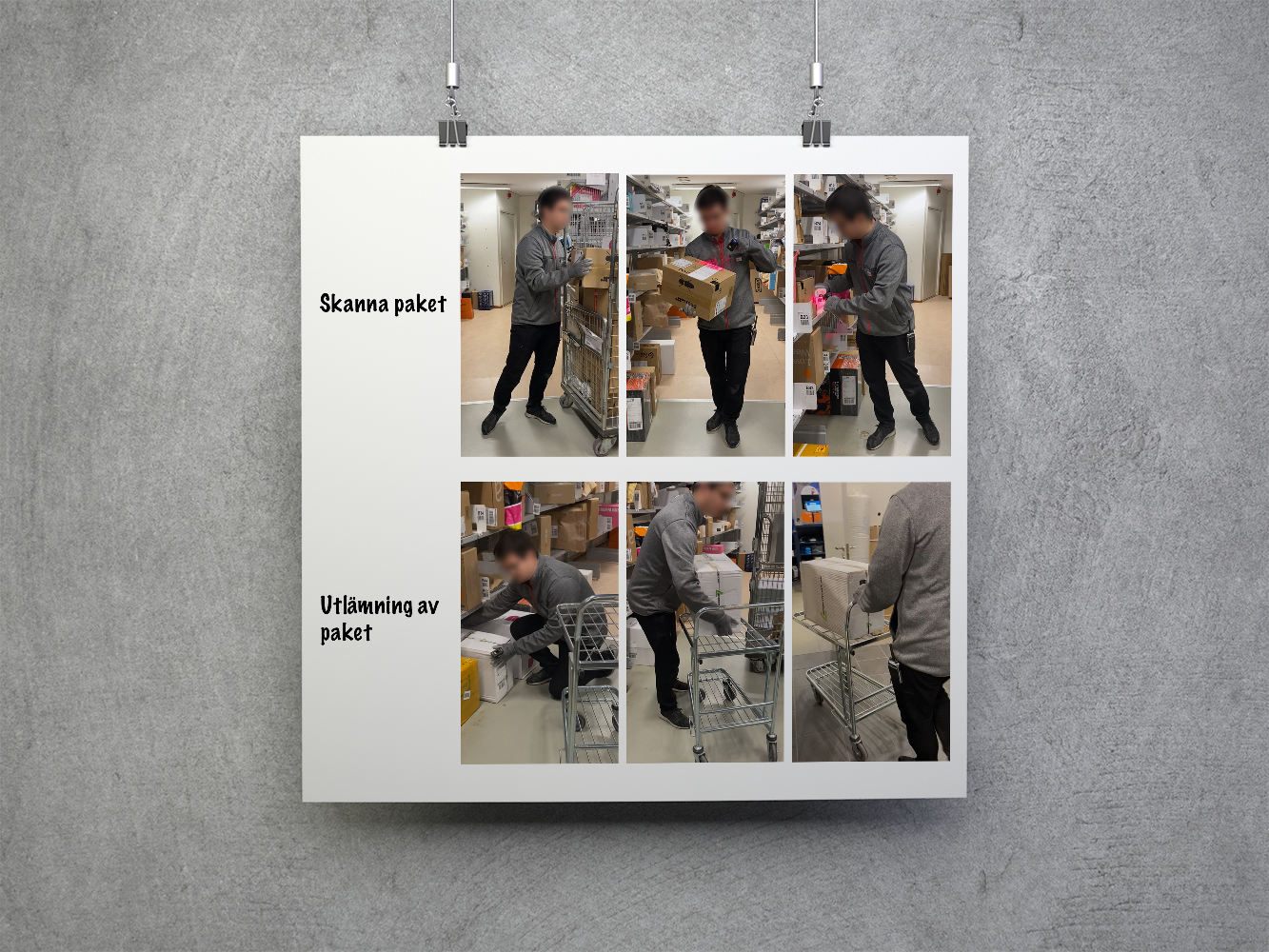
On-site interviews were conducted, along with documentation in the form of photos, videos, and audio recordings, to gain a comprehensive understanding of the work processes involved. This material serves as valuable resources for further analysis using methods such as RAMP (Risk Assessment and Management Process) and RULA (Rapid Upper Limb Assessment).
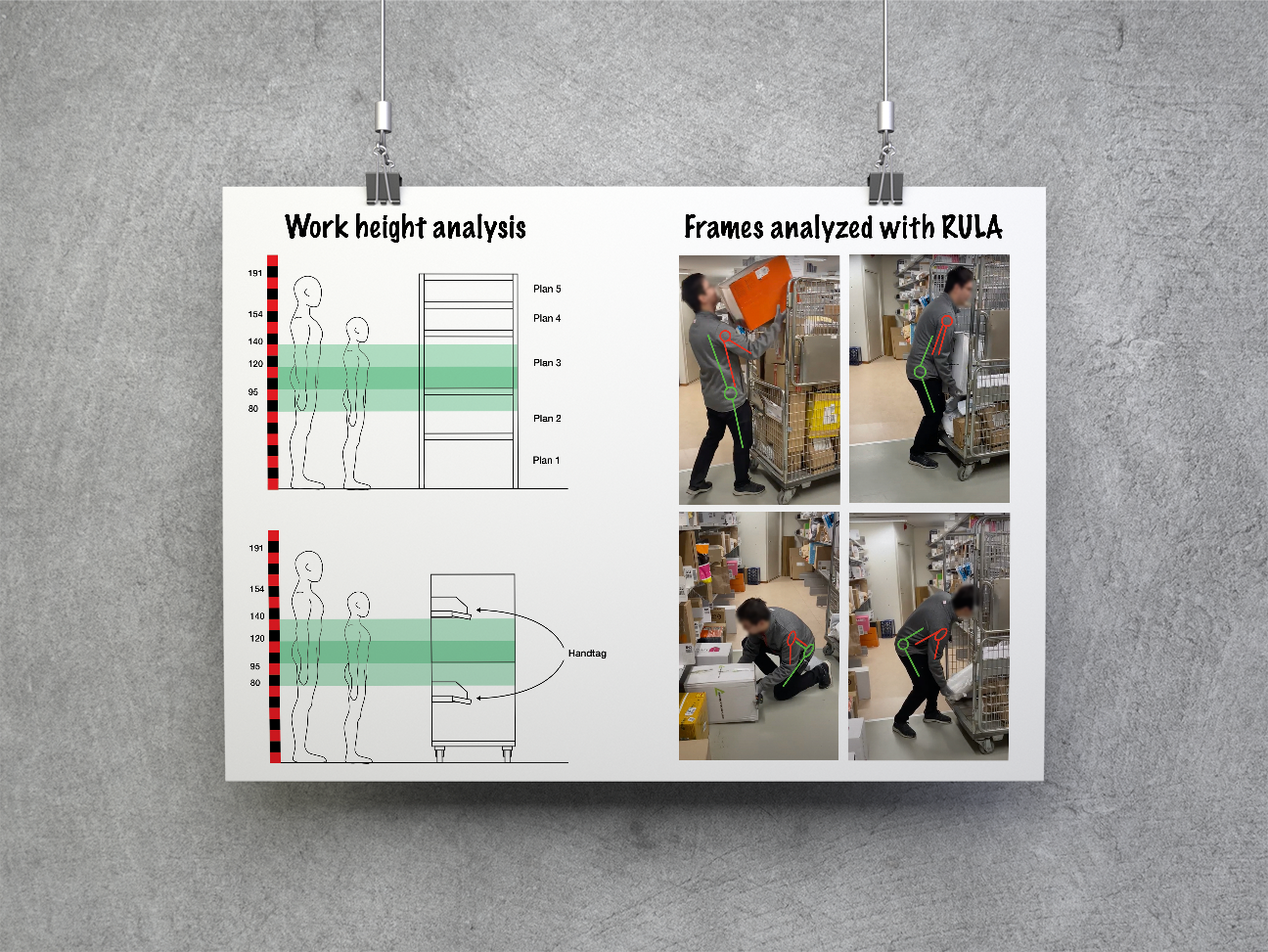
The gathered material was analyzed using the RAMP method to identify problem areas. The analysis revealed issues related to work postures, repetitive scanning tasks, lifting, pushing and pulling, as well as kneeling and squatting positions. Further analysis was conducted on the existing tools, considering their working height and positioning in relation to applicable standards.
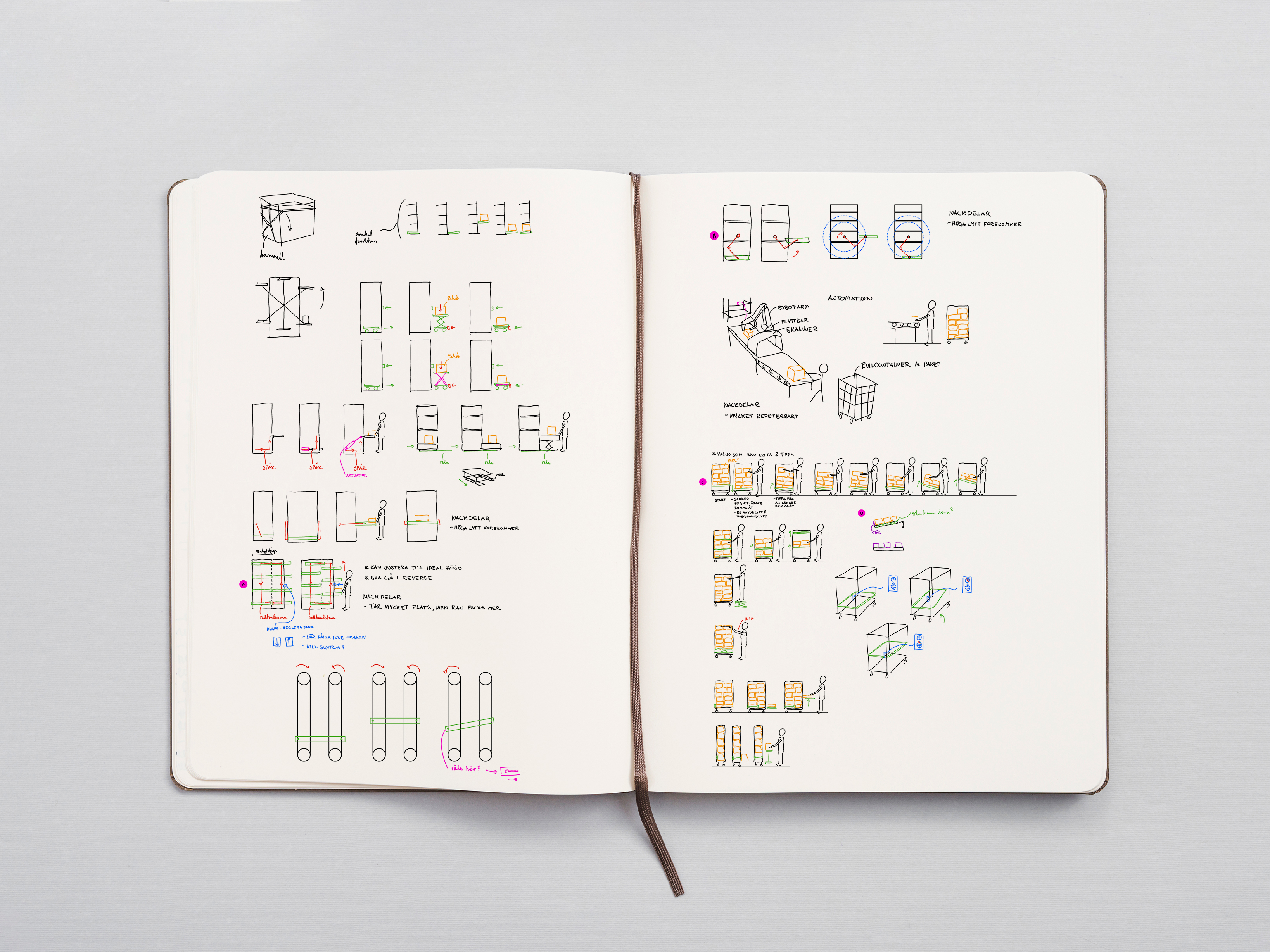
Based on the conducted research, the requirements were formulated, leading to several ideation sessions. These sessions generated two promising ideas, both centered around adjusting the work area in some manner.
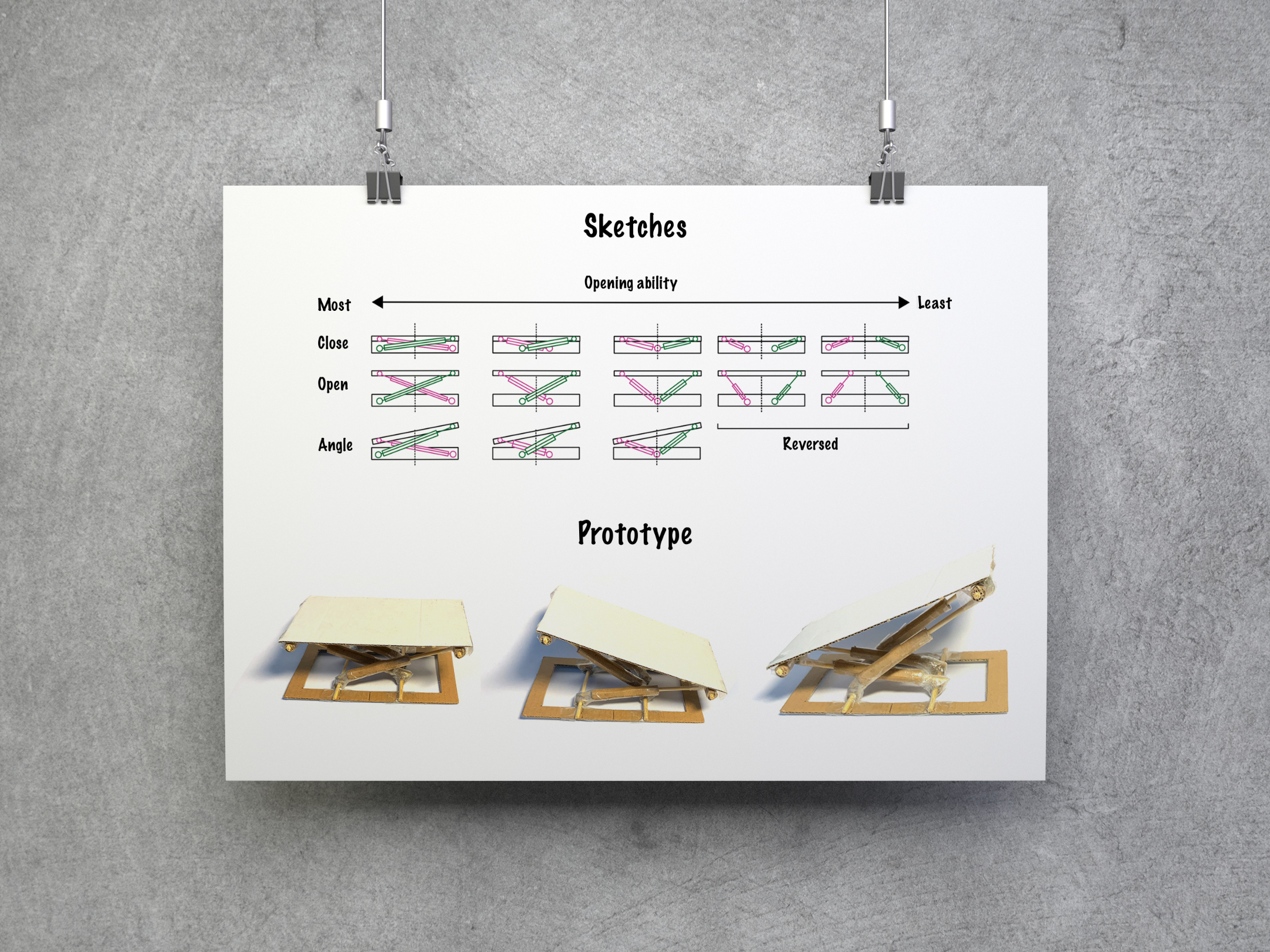
The initial concept involves redesigning the roll container, their existing tool. It enables users to adjust the height of the workstation while handling packages and incorporates an inclined surface to improve accessibility. Initially, the design included two discs connected by four linear actuators. However, a cardboard prototype revealed stability issues, necessitating a redesign.
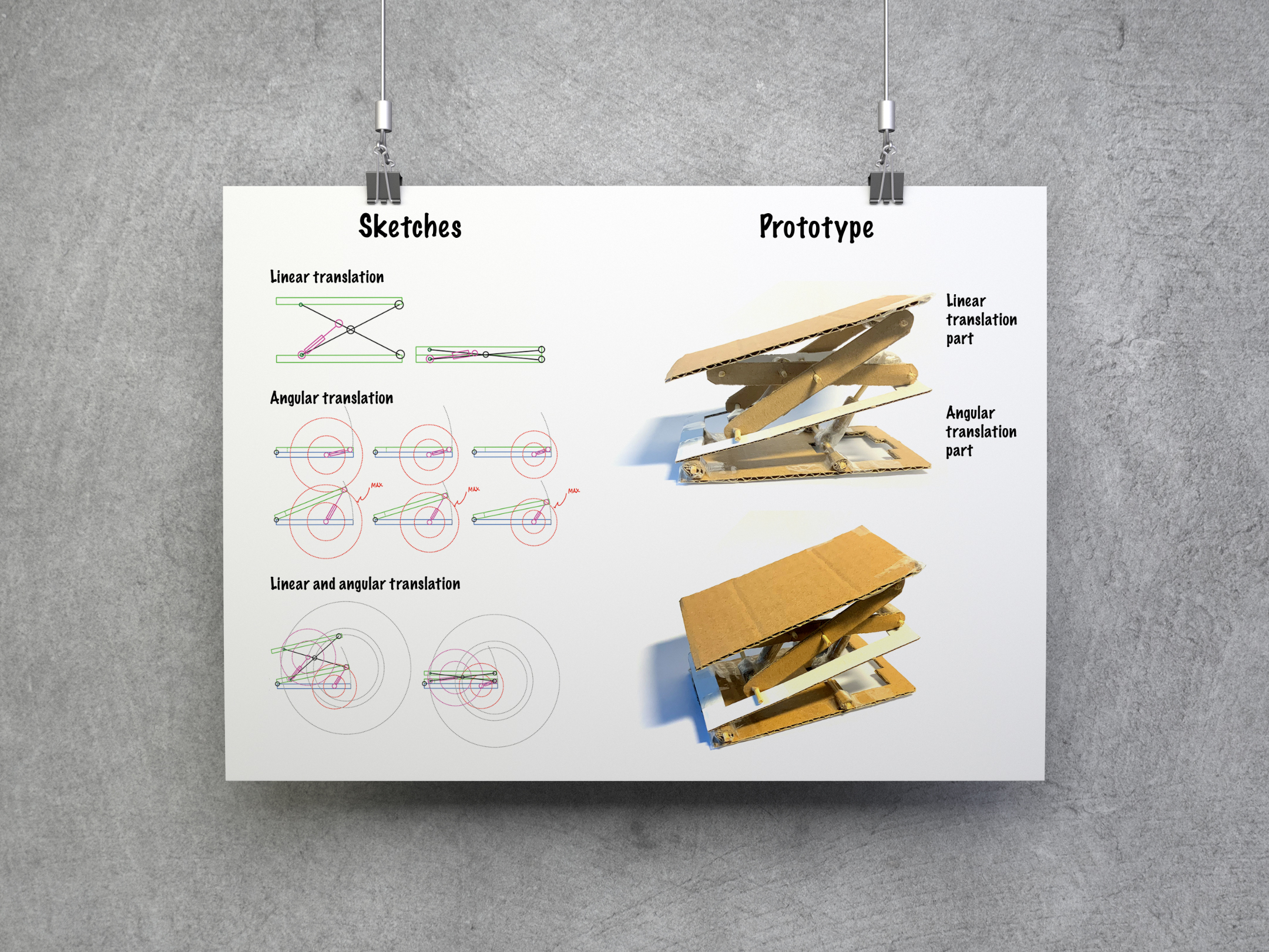
The second design proposal was inspired by stable lifting aids from the benchmark. It aimed to incorporate both height adjustment and inclination functionalities. Through iterations and prototyping, the concept's feasibility was confirmed. Actuator placement played a crucial role in determining the range of motion. Eventually, a combined concept was developed to integrate these features.
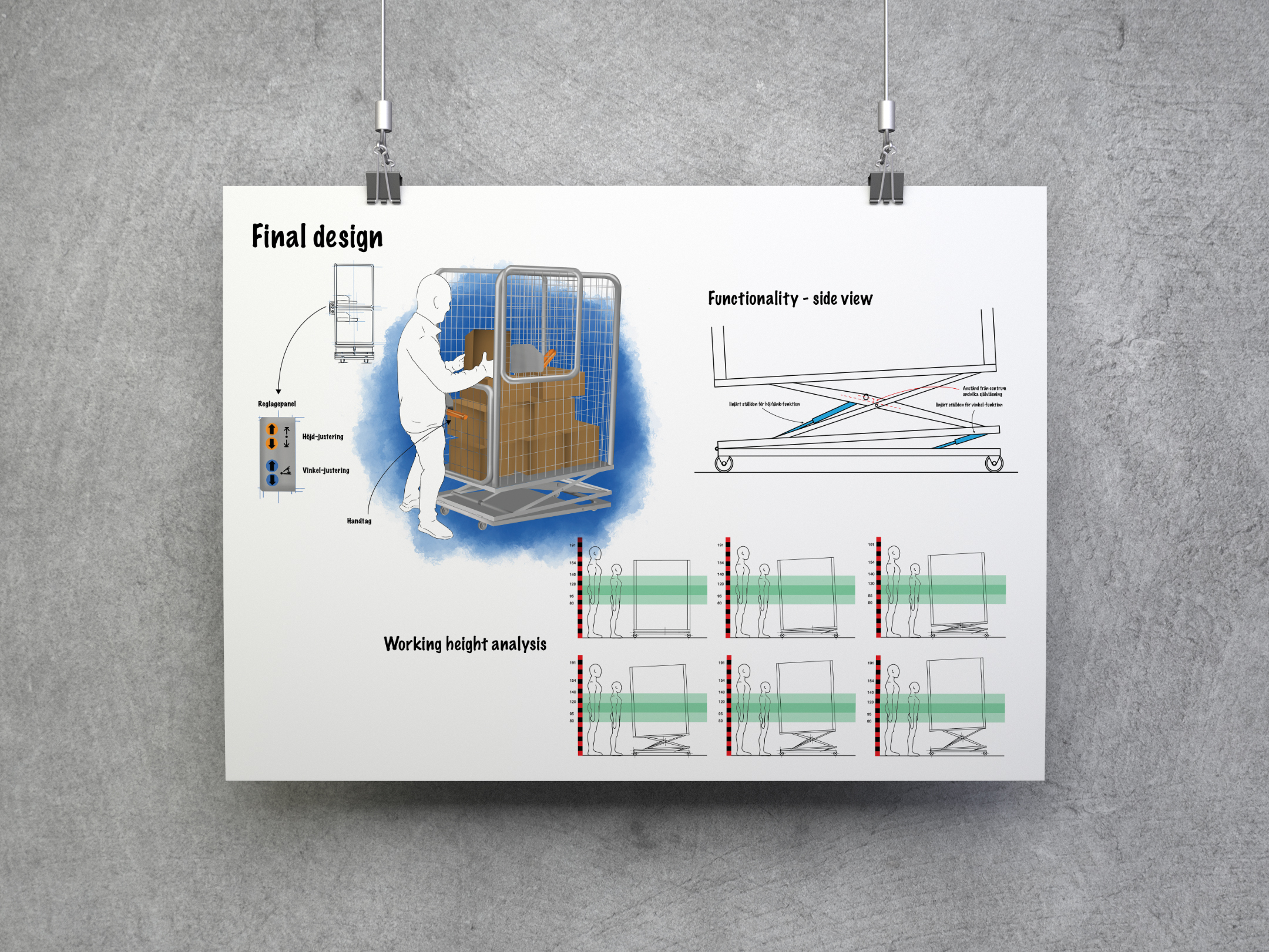
A CAD model highlighted an issue with the initial design, which caused self-locking of the scissor section due to conflicting forces. An axle displacement was introduced to resolve this.
The final concept is an electrically driven postal trolley with height adjustment and tilt functionality. It incorporates two electric linear actuators for vertical and angular movement. These design choices prioritize ergonomics and accessibility for handling loads.